
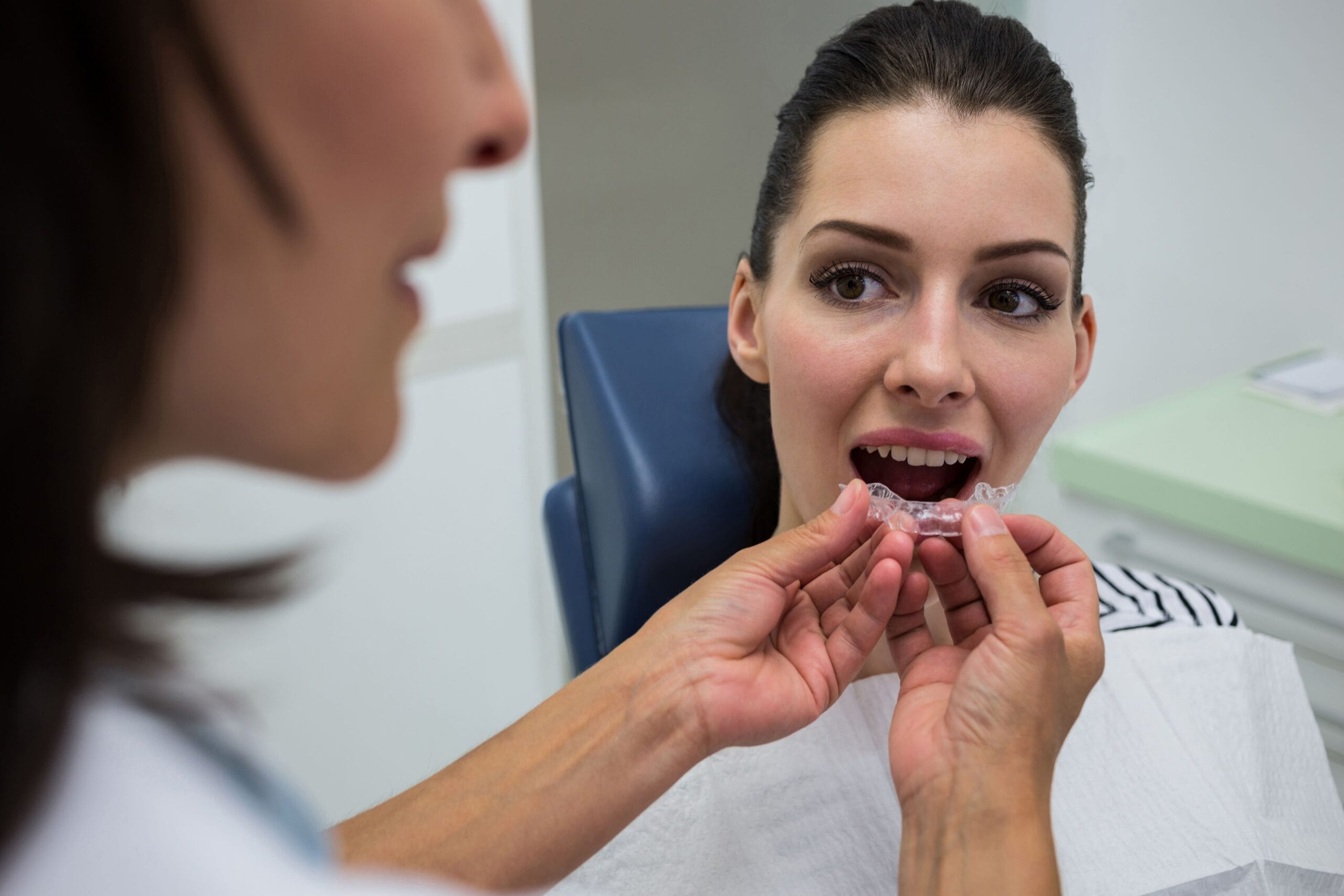
If you’ve been considering straightening your teeth without the wires and brackets of traditional braces, clear aligners have almost certainly crossed your radar. And if you’re like most people, your first question isn’t “how do they work?” — it’s how long is this going to take?
It’s a fair question. Time is one of the biggest factors in any orthodontic decision, and the answer is more nuanced than most aligner brands let on in their marketing. Here is the honest, detailed answer that actually helps you plan — not just the glossy version.
- The Short Answer: It Depends on Your Case
- Understanding the Clear Aligners Timeline: Tray by Tray
- Invisalign Treatment Time: What the Leading Brand Says vs. Reality
- How Fast Do Teeth Aligners Work? The Biology Behind the Movement
- Factors That Slow Down Your Clear Aligner Timeline
- How to Stay on Track and Finish on Time
- 5 FAQs About Clear Aligner Timelines
- The Bottom Line
The Short Answer: It Depends on Your Case
The clear aligners timeline typically ranges from 6 to 24 months, with the average patient completing treatment in around 12 to 18 months. But that range exists for a reason — no two mouths are the same, and the complexity of your specific dental issues is the single biggest variable in determining how fast your aligners will work.
Here is a general breakdown:
- Mild cases (minor spacing, slight crowding, small gaps): 3 to 6 months
- Moderate cases (moderate crowding, spacing issues, minor bite concerns): 6 to 12 months
- Complex cases (significant crowding, overbite, underbite, crossbite, rotations): 12 to 24 months
This is why a consultation with a qualified orthodontist or dentist is non-negotiable before you commit. An accurate clinical assessment — including X-rays and 3D imaging — is the only way to get a realistic personal timeline.
Understanding the Clear Aligners Timeline: Tray by Tray
Clear aligners work by applying gentle, consistent pressure to specific teeth using a series of custom-made plastic trays. Each tray is worn for approximately 1 to 2 weeks before being replaced by the next in the series, with each new tray moving your teeth incrementally closer to the desired position.
The total number of trays in your treatment plan directly determines your overall treatment duration. A mild case might involve 15 to 20 trays. A complex case could involve 40 or more.
What makes this different from traditional braces is the level of patient involvement. Aligners must be worn for 20 to 22 hours per day to stay on schedule. This is the most commonly overlooked factor in treatment timelines — and the most within your control. Patients who wear their trays consistently advance through their plan on time. Those who regularly remove them for comfort, social events, or meals frequently find their treatment extending by months.
Compliance isn’t just a suggestion. It’s the engine of the entire process.
Invisalign Treatment Time: What the Leading Brand Says vs. Reality
Invisalign — the most widely recognised clear aligner brand globally — typically quotes 12 to 18 months for comprehensive treatment. Their Lite plans, designed for simpler cases, are marketed at 6 to 7 months. These figures are accurate for ideal candidates who comply with wear-time requirements and attend check-ups regularly.
Invisalign treatment time, however, can be affected by several real-world factors:
Attachment Buttons
Many Invisalign plans include small tooth-coloured bumps bonded to teeth to help the aligner grip and exert force in specific directions. These are necessary for complex movements but can surprise patients who assumed the trays would be entirely invisible.
Refinements
If your teeth haven’t moved exactly as planned at the end of your original series, your orthodontist may prescribe additional trays — called refinements — to complete the job. This is common and not a sign that something went wrong. It simply extends the overall timeline by a few weeks to a few months.
IPR (Interproximal Reduction)
Some cases require the removal of tiny amounts of enamel between teeth to create space for movement. This is a standard procedure but does add appointments to your plan.
The most important takeaway? Invisalign treatment time advertised online is a guideline, not a guarantee. Your individual anatomy, bone density, age, and compliance will all play a role.
How Fast Do Teeth Aligners Work? The Biology Behind the Movement
Understanding how fast do teeth aligners work requires a brief look at what’s actually happening beneath the surface. Teeth don’t move through bone — they move with bone. Orthodontic force causes bone cells called osteoclasts to break down bone on the pressure side of a tooth, while osteoblasts rebuild bone on the tension side. This remodelling process is what allows permanent repositioning.
Because it’s a biological process, it cannot be safely rushed beyond certain limits. Moving teeth too fast increases the risk of root resorption — a shortening of tooth roots that can compromise long-term dental health. Reputable aligner systems are designed to stay within safe force thresholds, which is one reason you should be cautious of extremely cheap, fast-turnaround aligner kits that skip professional oversight entirely.
Age is also a genuine factor. Younger patients (teens and young adults) typically experience faster tooth movement because their bone is less dense and remodels more readily. Older patients can absolutely complete clear aligner treatment successfully, but may find their timeline sits toward the longer end of the range.
💡 Planning your first aligner consultation and want to understand all your options? Read the complete guide to dental treatments — covering implants, RCT, braces, aligners, and cosmetic dentistry — before your appointment so you walk in informed.
Factors That Slow Down Your Clear Aligner Timeline
Beyond compliance and case complexity, several other factors can extend your treatment:
- Missed or delayed check-ups. Your orthodontist monitors your progress and catches issues early. Skipping appointments means problems go undetected and uncorrected longer.
- Switching trays too early or too late. Trays need their full prescribed wear time to move teeth properly. Changing early leaves movement incomplete; changing late wastes time.
- Lifestyle habits. Grinding (bruxism) can distort aligner trays, reducing their effectiveness. Smoking can affect tissue health. Even certain medications can slow bone remodelling.
- Travel and disruption. Aligners and busy schedules don’t always mix smoothly — but with preparation they absolutely can. If you’re about to travel during treatment, this practical guide to managing Invisalign while travelling covers everything from carrying spare trays to handling emergencies abroad.
How to Stay on Track and Finish on Time
The patients who complete their clear aligner treatment on schedule — or even ahead of it — share a few consistent habits:
- Wear trays for the full 20 to 22 hours daily, every day
- Switch to new trays on the prescribed schedule without exception
- Attend every check-up, even when life gets busy
- Clean trays properly to maintain fit and hygiene
- Communicate with your orthodontist if something feels wrong rather than waiting for the next appointment
The technology does the work, but only if you let it.
5 FAQs About Clear Aligner Timelines
Q1: Can I speed up my clear aligner treatment?
There are FDA-cleared devices such as Propel and AcceleDent that use micro-vibration or micro-osteoperforation to accelerate bone remodelling and potentially shorten treatment time by 20 to 50 percent. Not all orthodontists offer these, and they come at additional cost. Discuss with your provider whether accelerated treatment is appropriate for your case — not every patient is a suitable candidate.
Q2: What happens if I don’t wear my aligners for 22 hours a day?
Teeth have a tendency to drift back toward their original position when not under consistent gentle pressure. Skipping hours or days of wear doesn’t just pause your progress — it can actively reverse it, requiring you to go back to a previous tray. Consistent under-wearing is one of the primary reasons treatment timelines extend significantly beyond initial estimates.
Q3: Is Invisalign faster than traditional braces?
For mild to moderate cases, Invisalign treatment time is broadly comparable to braces, sometimes slightly faster. For complex cases — particularly those involving significant vertical movements or severe bite correction — traditional braces may still offer more precise control and potentially faster results. Your orthodontist is best placed to advise which system suits your specific needs.
Q4: Will I need a retainer after clear aligner treatment?
Yes, without exception. Once your active treatment is complete, teeth will gradually shift back without retention. Most patients are prescribed a removable retainer worn nightly (or full-time initially), sometimes supplemented by a fixed retainer bonded behind the front teeth. Retention is a lifelong commitment — the investment you made in your smile deserves to last.
Q5: At what age can someone start clear aligner treatment?
Most aligner systems — including Invisalign Teen — are suitable from around age 12 to 13, once the majority of permanent teeth have erupted. There is no upper age limit. Adults in their 40s, 50s, and beyond successfully complete aligner treatment regularly. Older patients may have a slightly longer timeline due to denser bone, but outcomes are equally achievable with proper compliance and professional oversight.
The Bottom Line
The clear aligners timeline is not a one-size-fits-all answer — it’s a personalised estimate shaped by your dental complexity, your compliance, your biology, and the quality of professional guidance you receive. Most patients land somewhere between 6 and 18 months, with clear, measurable progress visible well before treatment ends.
What you can control is straightforward: wear your trays, keep your appointments, and work with a qualified professional who gives you an honest plan from day one. Do that, and clear aligners will deliver exactly what they promise.
Disclaimer: This blog is for informational purposes only and does not substitute professional dental or orthodontic advice. Please consult a qualified dentist or orthodontist for a personalised treatment plan.