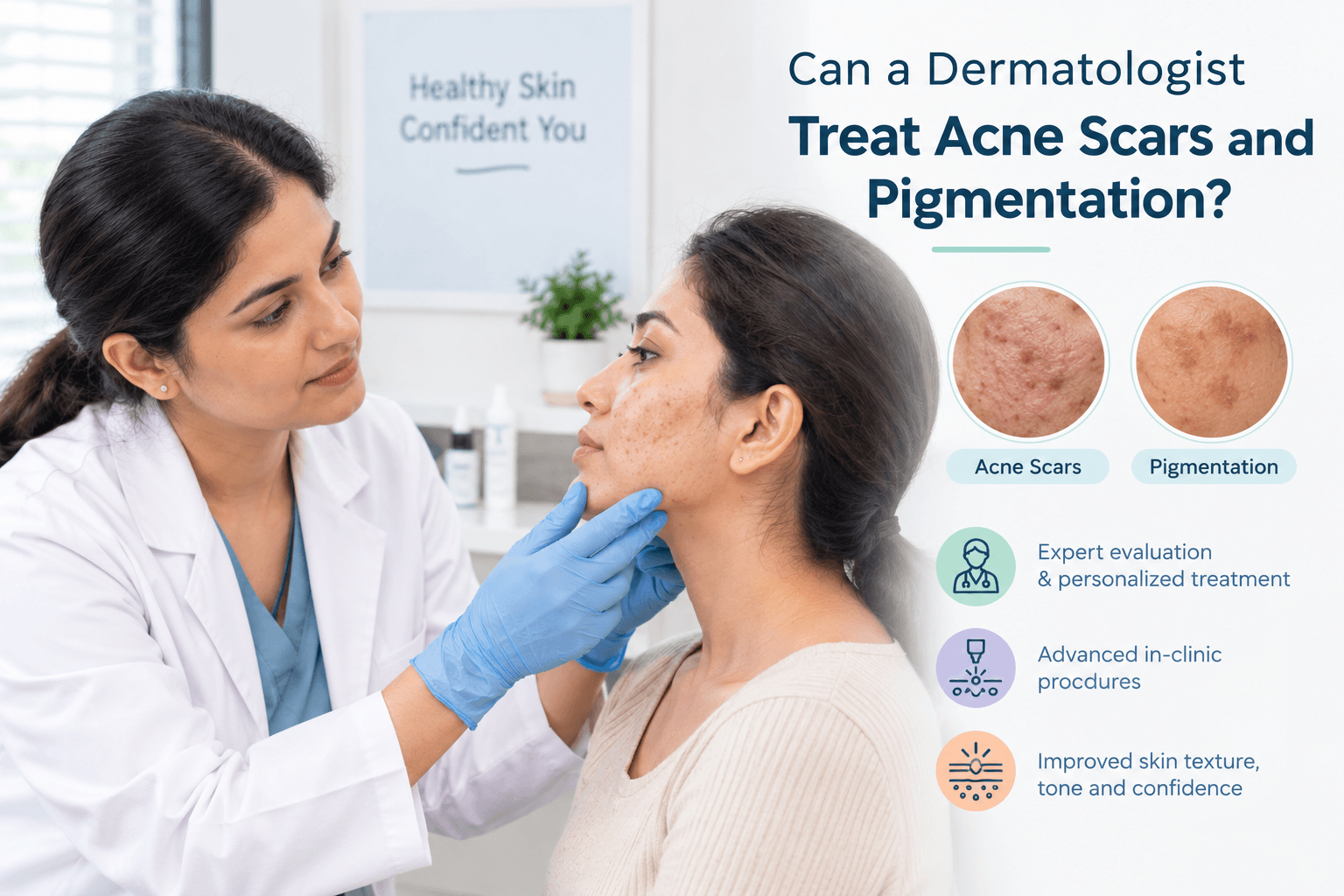
Yes. Dermatologists treat both acne scars and post-acne pigmentation, but the two need different approaches. Scars are changes in skin texture. Pigmentation is a change in skin colour. Most people see gradual improvement rather than complete erasure, and results usually come from a combination of treatments over several weeks or months.
Scars vs Pigmentation: Why the Difference Matters
Many people use “acne scars” for any mark a pimple leaves behind. Dermatologists separate them:
- Pigmentation (dark spots or patches) comes from excess melanin after inflammation. It is a colour change, and the skin surface is usually smooth.
- Redness is a related post-acne mark that can also fade without being a true scar.
- Scars are changes in the skin’s structure, caused by disrupted healing and collagen loss or excess.
A dermatologist can tell which one you have, and that decides the treatment. A product that fades dark spots will not lift a sunken scar.
What Types of Acne Scars Are There?
- Boxcar scars: wide depressions with sharp edges
- Ice pick scars: narrow, deep, V-shaped marks
- Rolling scars: broad dips that give skin a wavy look
- Raised (hypertrophic) scars: bumps caused by excess collagen, common on the chest and back
- Keloids: raised scars that are harder to treat and can return
Each type responds differently, which is why a single “scar treatment” rarely works for everyone.
Can Acne Scars Be Removed Permanently?
Scars can often be improved, and sometimes the improvement lasts, but complete removal is rarely promised. Many treatments work by stimulating new collagen, so results build gradually. Some need maintenance or repeat sessions. Expect your dermatologist to talk about “reducing” scars, not “erasing” them.
How Do Dermatologists Treat Acne Scars?
Treatment is matched to scar type, skin tone, budget and downtime.
- Chemical peels remove the top layer of skin and stimulate collagen. Mild peels usually take several sessions, often spaced two to four weeks apart.
- Microneedling makes tiny punctures to trigger collagen production. It is considered safe for all skin tones and is often combined with radiofrequency, peels or PRP.
- Radiofrequency microneedling pairs the two methods and may work better than either alone.
- PRP (platelet-rich plasma) uses your own platelets to boost the effect of other treatments.
- Microdermabrasion gently exfoliates. It does not treat deep scars directly but can even out tone and improve other results.
- Fillers plump depressed scars. Results typically last months to a couple of years, so touch-ups are common.
- Lasers resurface skin or smooth the area around scars.
- Injections and surgery are used for raised scars, keloids or deep scars, sometimes alongside laser or PRP.
How Do Dermatologists Treat Post-Acne Pigmentation?
The goal is to reduce excess melanin and even out tone, gradually. Triggers include sun exposure, hormonal changes, inflammation and genetics. Treatment usually combines:
- Topical medications that lighten dark marks
- Chemical peels
- Laser treatment
- Strict daily sun protection
Sun protection is not optional. Unprotected sun can darken marks again and undo weeks of progress.
Why Acne Control Comes First
Scar treatment usually starts only once active acne is under control. New breakouts mean new inflammation and new scars. Tell your dermatologist about any acne medication you’ve used in the past two years, since some combinations can cause side effects with certain procedures. If you are still breaking out, our guide to acne in adults over 30 explains why adult acne behaves differently.
Scar and Pigmentation Treatment at Novocare, Kochi
Novocare’s advanced acne and acne scar treatment service includes:
- Chemical peels
- Microneedling
- PRP (platelet-rich plasma)
- GFC (growth factor concentrate)
- MNRF
- Carbon laser peel
- Microdermabrasion (skin polishing)
- Mono threads
For dark spots and uneven tone, Novocare’s hyperpigmentation and melasma treatment uses laser treatment, chemical peels and targeted topical treatments, customised to your skin type. Laser toning is part of this service. Novocare notes that results depend on skin type and lifestyle, and can last months with sun protection and maintenance. The clinic’s uneven skin tone medifacials are another option for mild concerns.
Mild redness or peeling for a few days is possible after peels, and brief redness after lasers.
Who Should You See?
Novocare’s consultant dermatologists are Dr Nadiya Rahman, Dr Reem M Padiyath and Dr Jiss Elizabeth. If your pigmentation seems tied to hormones, such as PCOS, Dr Jiss’s dual training in dermatology and gynaecology may help. Not sure how to pick? Read how to choose a good dermatologist.
What to Expect From a Consultation
- A skin exam to identify scar types, pigmentation and their locations
- Questions about how your skin affects your confidence and what results you want
- A plan built around your scar type, skin tone, budget and downtime
- Often more than one treatment, spread over multiple sessions
Results appear gradually as collagen forms, so patience matters.
Tips while you treat scars and pigmentation
- Wear broad-spectrum sunscreen (SPF 30 or higher) every day
- Never pick, pop or squeeze pimples
- Keep a gentle, regular routine for acne-prone skin
- Avoid unverified home remedies, which can worsen marks
- Attend follow-up visits so the plan can be adjusted
Frequently Asked Questions
Can a dermatologist remove acne scars completely? Usually not completely. Treatments reduce their appearance, and sometimes the improvement is long-lasting.
How many sessions will I need? It depends on scar type and treatment. Mild peels often need several sessions, and microneedling and fillers usually need repeat visits.
Can I treat scars while I still have acne? Generally not. Dermatologists control active breakouts first to prevent new scars.
Is pigmentation the same as a scar? No. Pigmentation is a colour change, while scars are texture changes. Many people have both.
When should I see a dermatologist? When marks persist after breakouts heal, dark spots worsen, or home products have not helped. You can book an appointment at Novocare, open Monday to Saturday, 10 AM to 6 PM.