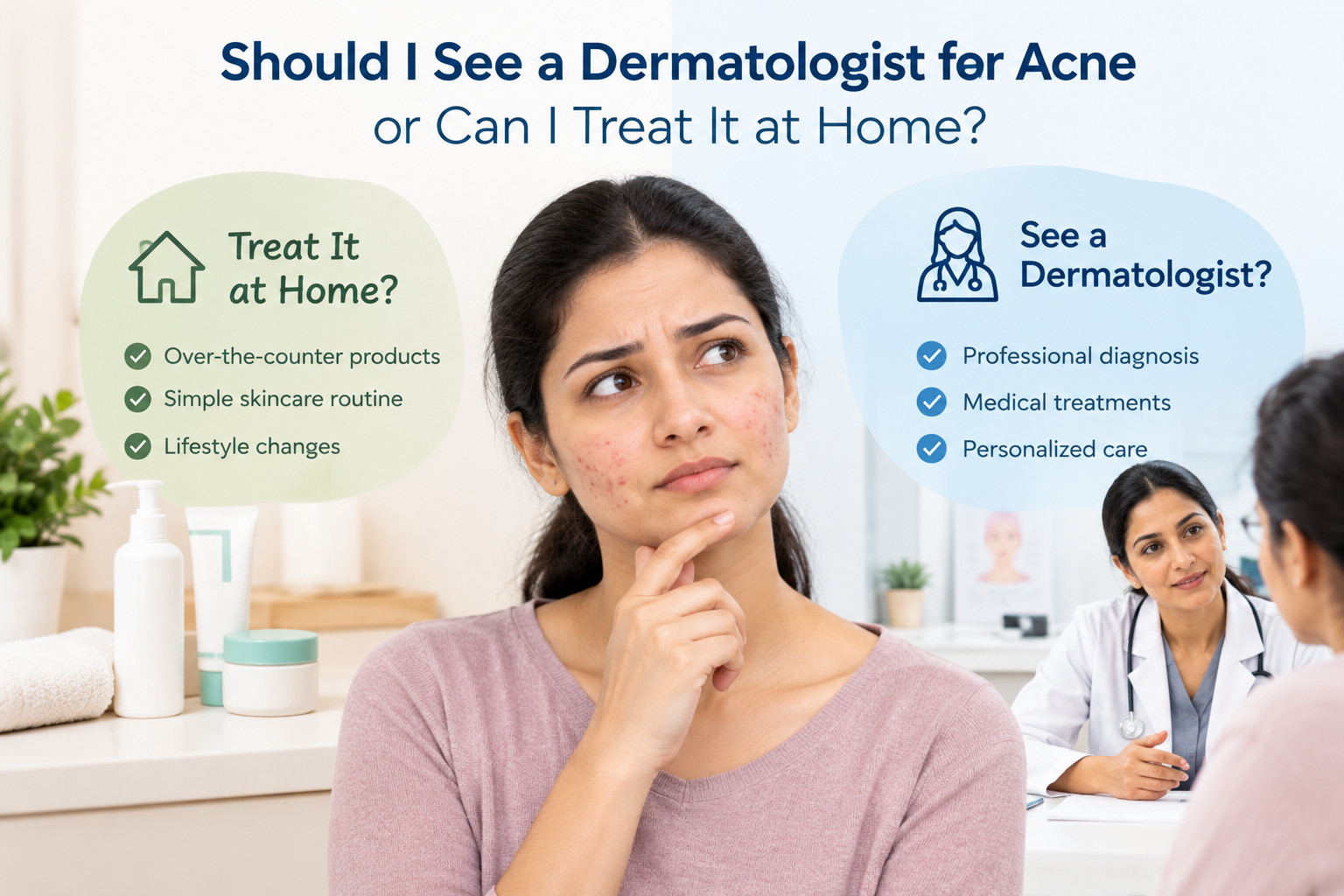
Mild acne, meaning blackheads, whiteheads and a few small pimples, can often be managed at home with the right over-the-counter products. See a dermatologist if your pimples are large, painful or deep, if acne leaves scars or dark marks, if you’ve had no improvement after 6 to 8 weeks of consistent home care, or if you are pregnant or planning a pregnancy. It is never the wrong time to book a consultation.
When Can You Treat Acne at Home?
Dermatologists agree that many adults with mild acne can clear their skin with products sold without a prescription. Home care works best when your breakouts are occasional, small and not leaving marks.
Home treatment is usually not enough if you have:
- Large, painful pimples that sit deep under the skin
- Acne that leaves scars when it heals
- Dark spots that linger after pimples fade
- Breakouts that keep coming back despite a steady routine
What Does an Effective At-Home Routine Look Like?
A simple, consistent routine beats a shelf full of products.
- Cleanse gently twice a day. Use a mild cleanser to remove oil, sweat and impurities without irritating your skin.
- Choose one active ingredient. Dermatologists commonly recommend adapalene, azelaic acid, benzoyl peroxide or salicylic acid. If you try benzoyl peroxide, start with a 2.5% strength to limit dryness and burning.
- Apply a thin layer to the whole acne-prone area, not just the visible spots. This treats existing pimples and helps prevent new ones.
- Moisturise with a non-comedogenic product. Acne-prone skin still needs a healthy barrier.
- Wear sunscreen daily. It helps stop post-acne marks from darkening.
Be patient. Stick with one product for 6 to 8 weeks without adding another. If it works, you can expect fewer breakouts within about 4 to 8 weeks and clearer skin around the 16-week mark.
What Should You Avoid?
Some popular shortcuts do more harm than good:
- Toothpaste. It contains abrasives and other ingredients that irritate skin and do nothing for acne.
- Kitchen-cupboard remedies. DIY mixtures can inflame skin and worsen pigmentation.
- Constantly switching products. Skin needs weeks to respond.
- Stacking several strong actives. This often causes dryness and irritation that looks like worse acne.
- Picking or popping. It raises the risk of scarring and dark marks.
Signs It’s Time to See a Dermatologist
Book an appointment if any of these apply:
- Your acne hasn’t improved after 6 to 8 weeks of steady home treatment
- Pimples are deep, painful or cystic
- You are noticing scars or dark spots after breakouts clear
- You are pregnant or trying to conceive, since some over-the-counter acne treatments are not safe in pregnancy
- Acne is affecting your confidence or daily life
Dark marks after acne (post-inflammatory hyperpigmentation) are especially worth acting on. They signal significant inflammation, which store-bought products rarely control.
What Can a Dermatologist Do That Home Care Can’t?
Confirm it’s really acne. Rosacea, folliculitis and perioral dermatitis can look like acne but need different treatment. Treating the wrong condition wastes months.
Prescribe stronger treatment. Depending on your skin, this can include prescription retinoids, topical or oral antibiotics, hormonal therapy for hormone-driven acne, or isotretinoin for severe cases.
Offer in-clinic procedures. At Novocare’s advanced acne and acne scar treatment service, options include chemical peels, microneedling and carbon laser peel. These help calm active breakouts, refine texture and improve post-acne marks.
Reduce scarring risk. Controlling inflammation early is the best way to prevent permanent marks. If pigmentation has already set in, Novocare also offers hyperpigmentation and melasma treatment.
Follow up and adjust. A dermatologist monitors your response and changes the plan if needed, which home care cannot do.
Could Your Acne Be Hormonal?
If breakouts flare around your period, cluster on the jawline and chin, or come with irregular cycles or excess hair growth, hormones may be involved. Conditions like PCOS often show up on the skin first. Dr Jiss Elizabeth, a consultant dermatologist and gynaecologist at Novocare, focuses on PCOS and PCOD, so she can look at both the skin and the hormonal picture. For more on why acne behaves differently in adulthood, read our guide to acne in adults over 30.
Acne Care at Novocare, Kochi
Novocare’s skin care team in Edappally, near Lulu Mall Junction, includes consultant dermatologists Dr Nadiya Rahman and Dr Reem M Padiyath alongside Dr Jiss Elizabeth. Not sure who to see? Our guide on how to choose a good dermatologist explains what to look for.
The clinic is open Monday to Saturday, 10 AM to 6 PM. You can book an appointment online or call +91 62352 00012.
The Best Approach: Combine Both
Home care and professional care work best together. A dermatologist treats the cause and the damage, while a steady daily routine keeps results going. Start at home if your acne is mild. If it isn’t clearing within a couple of months, don’t keep guessing.
Frequently Asked Questions
Can I treat acne at home without seeing a doctor?
Yes, if it is mild. Use a gentle cleanser, one proven active ingredient, moisturiser and sunscreen for 6 to 8 weeks.
How long should I try home treatment before seeing a dermatologist?
Give it 6 to 8 weeks. If there’s no improvement, see a dermatologist. A few months without clear skin is also a good reason to book.
Is any acne too mild to see a dermatologist?
No. Dermatologists say even mild acne can benefit from professional advice.
Do home remedies work for acne?
Not reliably. Many can irritate skin and worsen inflammation or pigmentation.
Is it safe to use acne products during pregnancy?
Not always. Some over-the-counter acne treatments are unsafe during pregnancy, so consult a dermatologist first.
Can a dermatologist treat acne scars too?
Yes. Once active acne is under control, treatments like microneedling and chemical peels can improve scars and marks.