
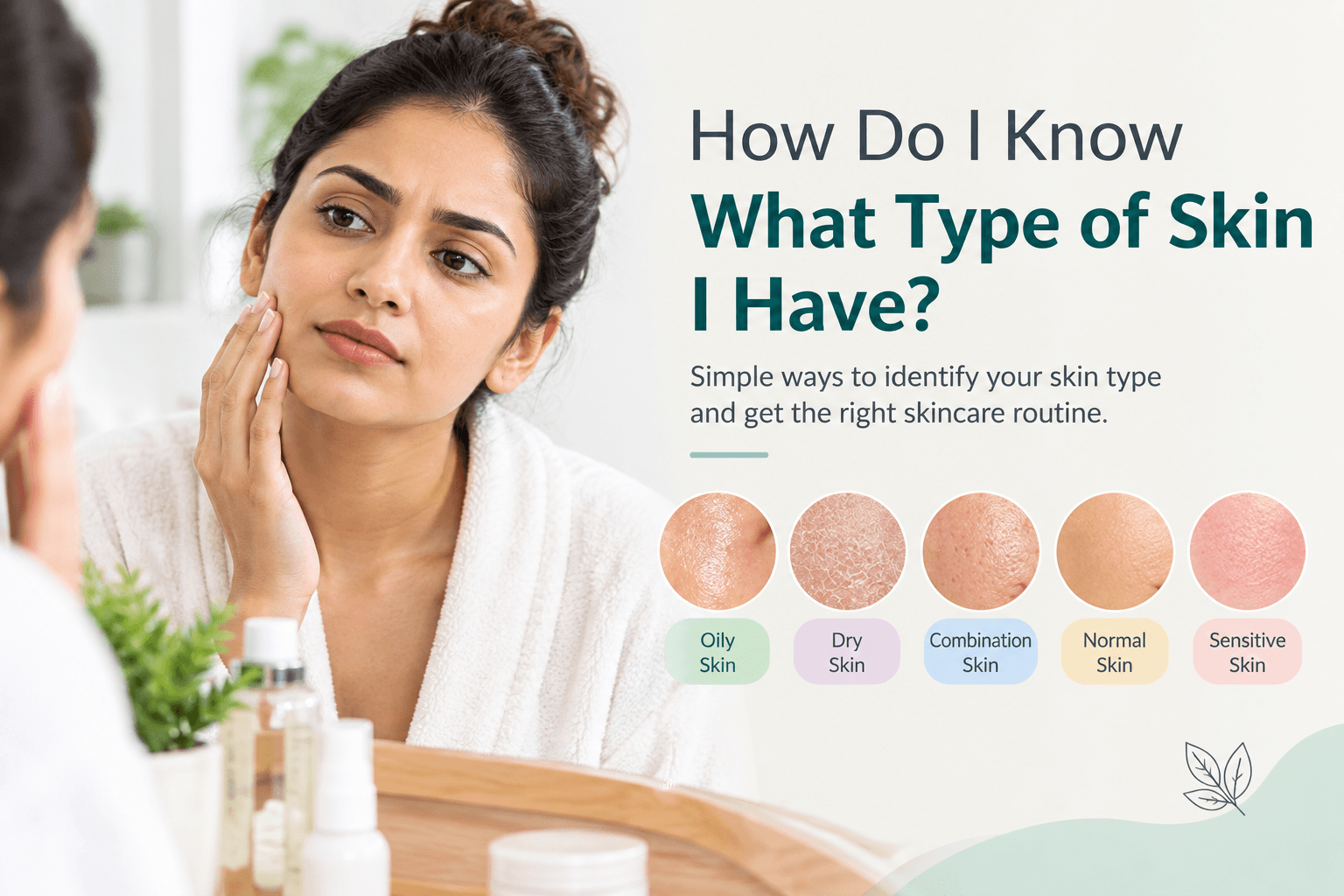
Knowing your skin type is one of the first steps toward building an effective skincare routine. The products that work well for oily skin may not be suitable for dry or sensitive skin. Understanding whether your skin is oily, dry, combination, normal, or sensitive can help you choose the right cleanser, moisturizer, sunscreen, and other skincare products.
But how do you know what type of skin you actually have?
The good news is that you can get a good idea of your skin type with a simple at-home test.
- What Are the Different Skin Types?
- 1. Oily Skin
- 2. Dry Skin
- 3. Combination Skin
- 4. Normal Skin
- 5. Sensitive Skin
- How Can I Find Out My Skin Type at Home?
- Another Simple Way: The Blotting Paper Test
- Can Your Skin Type Change?
- Skin Type vs. Skin Condition: What's the Difference?
- How Should You Choose Skincare Based on Your Skin Type?
- Don't Forget Sunscreen
- When Should You See a Dermatologist?
- Frequently Asked Questions
- Final Takeaway
What Are the Different Skin Types?
Skin is commonly classified into five main types:
- Oily skin
- Dry skin
- Combination skin
- Normal skin
- Sensitive skin
Keep in mind that sensitive skin is slightly different from the other categories. Sensitivity describes how easily your skin reacts to products or environmental factors and can occur alongside oily, dry, combination, or normal skin.
Let’s look at each type in more detail.
1. Oily Skin
Oily skin produces more sebum, or natural oil, than your skin needs. As a result, your face may develop a noticeable shine during the day.
Common signs of oily skin include:
- A shiny or greasy appearance
- Oiliness across most areas of the face
- More noticeable pores
- Frequent blackheads or whiteheads
- A tendency to develop acne
The forehead, nose, and chin may be particularly oily.
If you have oily skin, avoid assuming that your skin does not need moisturizer. Using a lightweight, non-comedogenic moisturizer can help support the skin barrier without adding excessive heaviness.
2. Dry Skin
Dry skin occurs when the skin lacks sufficient moisture and may also have difficulty maintaining its protective barrier.
Common signs include:
- A tight feeling after cleansing
- Rough or flaky patches
- Dull-looking skin
- Increased sensitivity or irritation
- Fine lines that may appear more noticeable when the skin is dry
Dry skin can become more noticeable during cold or dry weather or after using harsh cleansers.
A gentle cleanser and a moisturizer containing ingredients such as ceramides or glycerin can help support the skin’s moisture barrier.
3. Combination Skin
Combination skin has characteristics of both oily and dry or normal skin.
Typically, the T-zone—the forehead, nose, and chin—is more oily, while the cheeks may be normal or dry.
You may have combination skin if:
- Your nose and forehead become shiny during the day
- Your cheeks feel comfortable or dry
- Your pores are more noticeable around your nose
- You experience both oiliness and dry patches
Because different areas of the face behave differently, you may need to adjust your skincare routine according to your skin’s needs rather than treating your entire face as extremely oily or extremely dry.
4. Normal Skin
Normal skin is generally well balanced. It is neither excessively oily nor excessively dry.
Signs of normal skin may include:
- Relatively balanced oil production
- Minimal dryness or flaking
- Few persistent blemishes
- A comfortable feeling after cleansing
- Pores that are not particularly noticeable
Even if you have normal skin, a basic routine of gentle cleansing, moisturizing, and daily sunscreen is still important.
5. Sensitive Skin
Sensitive skin tends to react more easily to certain skincare products or environmental conditions.
Possible signs include:
- Redness
- Burning or stinging
- Itching
- Irritation after using certain products
- Increased sensitivity to fragrances or harsh ingredients
Sensitive skin isn’t necessarily a separate “skin type” in the same way as oily or dry skin. You can have oily and sensitive skin, dry and sensitive skin, or combination and sensitive skin.
If your skin frequently burns, becomes swollen, develops a rash, or reacts strongly to skincare products, consider consulting a dermatologist rather than trying multiple products on your own.
How Can I Find Out My Skin Type at Home?
One simple way to get an idea of your skin type is the bare-face test.
Step 1: Wash your face
Use a gentle cleanser to remove makeup, sunscreen, oil, and other products from your skin.
Step 2: Pat your skin dry
Gently pat your face with a clean towel. Avoid rubbing your skin.
Step 3: Don’t apply skincare products
For the next 30–60 minutes, leave your skin bare. Avoid moisturizer, serum, facial oil, sunscreen, or makeup during this period.
Step 4: Observe your skin
After about 30–60 minutes, look at your skin in a mirror and notice how it feels.
Ask yourself:
- Does my entire face look shiny?
- Is only my forehead and nose oily?
- Does my skin feel tight or uncomfortable?
- Do I see flaky or rough areas?
- Does my skin feel comfortable and balanced?
- Is there redness, itching, burning, or irritation?
Your answers can give you a general indication of your skin type.
Another Simple Way: The Blotting Paper Test
You can also use blotting paper to get an idea of how much oil your skin produces.
Gently press separate pieces of blotting paper against your forehead, nose, cheeks, and chin. Hold each piece against the skin for a few seconds and examine it against the light.
If there is a significant amount of oil on most of the pieces, your skin may be oily.
If oil appears mainly from your forehead and nose but not your cheeks, you may have combination skin.
If there is very little oil on the papers, your skin may be dry or normal.
However, this test is only a rough guide. It cannot diagnose a skin condition or determine whether your skin is sensitive.
Can Your Skin Type Change?
Yes. Your skin can change over time.
Factors such as age, hormones, climate, stress, medications, skincare products, and environmental conditions can affect oil production and skin hydration.
For example, someone may notice more oiliness during hot and humid weather and more dryness during colder months.
This is why it is useful to pay attention to how your skin behaves rather than relying on a skin-type label permanently.
Skin Type vs. Skin Condition: What’s the Difference?
This is an important distinction.
Your skin type generally refers to characteristics such as how much oil your skin naturally produces.
A skin condition or concern is something that may require specific care or medical evaluation.
For example, someone can have oily skin and also experience:
- Acne
- Hyperpigmentation
- Rosacea
- Eczema
- Irritation
- Uneven skin tone
Having oily skin does not automatically mean that acne is the cause of the oiliness, and having dry skin does not necessarily mean that you have a particular skin condition.
If you have a persistent or worsening skin concern, it is better to seek advice from a qualified dermatologist.
How Should You Choose Skincare Based on Your Skin Type?
Once you have an idea of your skin type, you can use it as a starting point when choosing skincare products.
For oily skin
Look for lightweight, non-comedogenic products. A gentle cleanser and lightweight moisturizer can help maintain the skin barrier without making your skin feel excessively greasy.
For dry skin
Choose gentle, hydrating products. Cream-based cleansers and moisturizers containing barrier-supporting ingredients may be helpful.
For combination skin
Use gentle products that don’t excessively dry the skin. You may find that your T-zone and cheeks need slightly different levels of hydration.
For normal skin
Focus on maintaining your skin barrier with a simple routine rather than using unnecessary products.
For sensitive skin
Choose gentle, fragrance-free products and introduce new products gradually. Avoid adding several new products at once because it can make it difficult to identify what caused an irritation.
Don’t Forget Sunscreen
Regardless of your skin type, daily sun protection is an important part of a basic skincare routine.
A broad-spectrum sunscreen with SPF 30 or higher can help protect your skin from ultraviolet (UV) radiation.
Choose a sunscreen texture that you are comfortable using consistently. For example, people with oily skin may prefer a lightweight formulation, while someone with dry skin may prefer a more moisturizing formulation.
When Should You See a Dermatologist?
An at-home skin-type test can help you understand your skin, but it cannot diagnose a skin disease.
Consider seeing a dermatologist if you have:
- Persistent or severe acne
- Significant redness or irritation
- Recurrent rashes
- Severe dryness or peeling
- Persistent itching or burning
- Sudden changes in your skin
- Dark spots or pigmentation that are changing or worsening
- A skin problem that does not improve with basic skincare
A dermatologist can examine your skin, identify potential underlying conditions, and recommend appropriate treatment.
Frequently Asked Questions
How can I tell if I have oily or combination skin?
If most of your face becomes oily or shiny, you may have oily skin. If oiliness is mainly concentrated around your forehead, nose, and chin while your cheeks are normal or dry, you may have combination skin.
How can I tell if I have dry skin?
If your skin regularly feels tight, rough, flaky, or uncomfortable, particularly after cleansing, it may be dry.
Can I have sensitive and oily skin?
Yes. Skin type and sensitivity are not mutually exclusive. You can have oily, dry, combination, or normal skin that is also sensitive.
Does skin type change with age?
Yes. Changes in hormones, oil production, skin barrier function, climate, medications, and other factors can affect how your skin behaves over time.
Is an online skin-type quiz accurate?
Online quizzes can provide a general indication, but they cannot replace an examination by a dermatologist, particularly if you have persistent symptoms or a suspected skin condition.
Final Takeaway
Understanding your skin type can help you make more informed skincare choices, but you don’t need a complicated routine to care for your skin. Start with the basics: a gentle cleanser, an appropriate moisturizer, and daily sunscreen.
If you’re experiencing persistent acne, irritation, redness, pigmentation, or another skin concern, consider consulting a dermatologist for personalized advice.