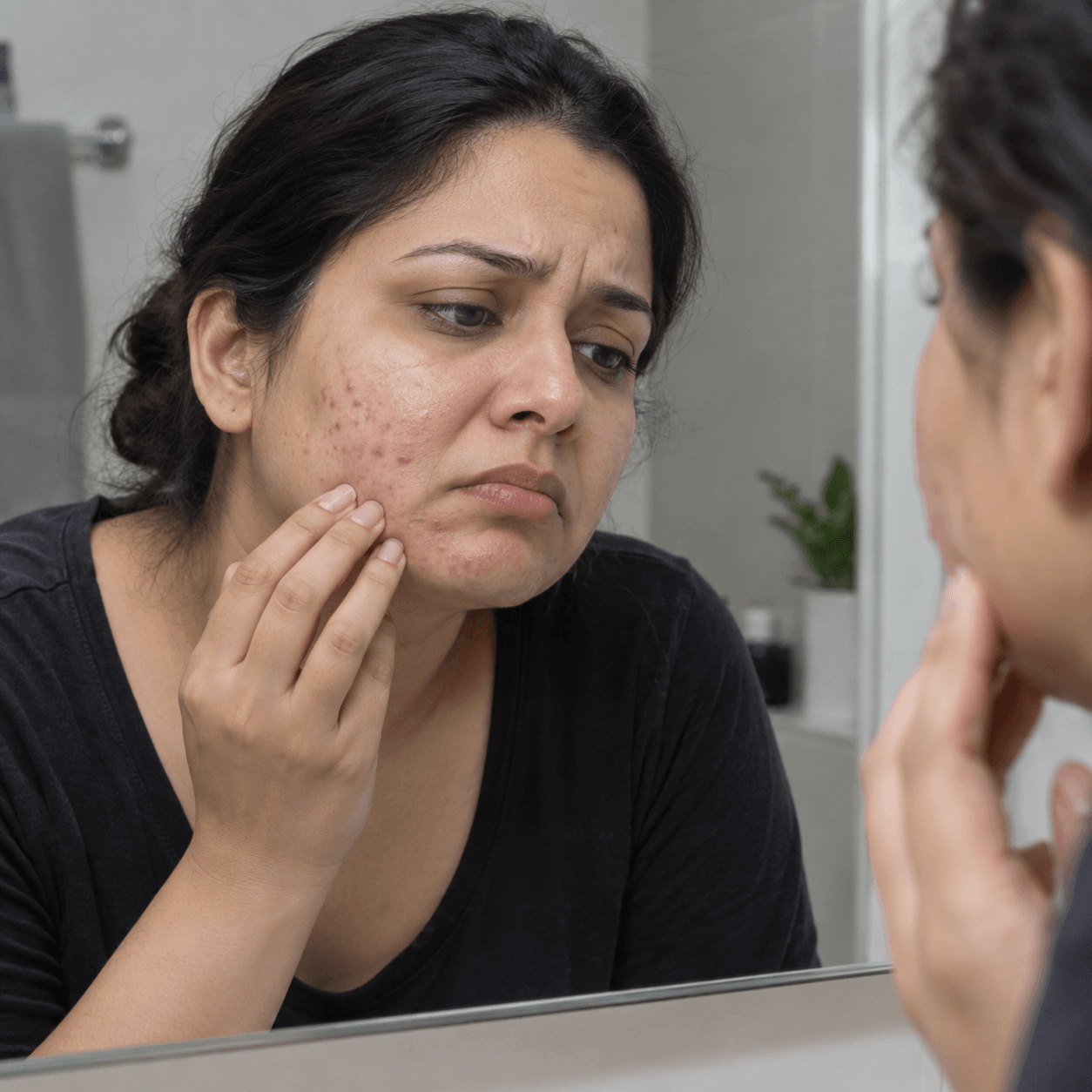
Most of us assume acne is something we outgrow once we leave our teenage years behind. So when breakouts show up at 32, 38, or even 45, it can feel confusing — even a little unfair. The truth is, adult acne is far more common than people realise, and it behaves quite differently from the acne many of us dealt with as teens.
Adult Acne Is More Common Than You Think
Acne after 30 isn’t rare or unusual. By this age, most teenage acne has resolved, yet an estimated 5% of men and around 30% of women continue to, or begin to, experience some form of acne after their teenage years. One dermatology study found that over two in five Americans in their 30s have acne, and women are affected far more often than men — roughly 12–22% of women have adult acne compared to only 4–6% of men.
Some people carry acne with them from their teenage years into adulthood; others develop it for the very first time well into their 20s or 30s — a pattern often called “adult-onset acne,” most commonly seen in women going through hormonal transitions such as perimenopause or menopause.
How Adult Acne Differs from Teenage Acne
While the basic mechanics of a breakout are the same at any age, the why and the where look quite different once you’re past your teens.
- The underlying drivers shift. Teenage acne is primarily driven by puberty-related hormone surges and excess oil production, whereas adult acne tends to have more varied causes — hormonal changes, stress hormone responses, medications, and sometimes a genetic tendency toward skin inflammation.
- It shows up in different places. Unlike teen breakouts, which often spread across the entire face, adult breakouts typically concentrate on the cheeks, jawline, and chin.
- The lesions look different. Adult acne tends to produce more inflammatory red bumps and cysts, and fewer plain whiteheads, than teenage acne does.
- It sticks around longer. Adult acne tends to be more chronic and longer-lasting than teen acne, which generally improves once adolescence ends.
- Scarring risk is higher. Because adult acne is more inflammatory and slower to heal, the chances of lasting marks, dark spots, and scarring are greater if it isn’t managed well.
- Adult skin needs a gentler touch. Because adult skin is often drier and more sensitive than teenage skin — even when it’s breaking out — the harsh, drying products that work for teens can irritate the skin barrier and make things worse.
What Actually Causes Acne After 30?
There’s rarely one single culprit. It’s usually a mix of the following:
- Hormonal fluctuations — the single biggest driver. Pregnancy, menstrual cycles, and perimenopause can all trigger oil gland activity and inflammation, particularly around the jawline and chin.
- Stress. Career and life stress raises cortisol levels, which further stimulates oil production and creates an inflammatory environment in the skin.
- Lifestyle changes. Busy schedules in your 30s can mean inconsistent skincare routines, more takeout meals, disrupted sleep, and higher overall stress.
- Diet. A high-fat or high-sugar diet can interfere with hormonal balance and encourage extra oil production.
- Medications and underlying skin conditions. Certain medications can disrupt hormones or promote inflammation, and conditions like rosacea can overlap with or worsen adult acne.
How Adult Acne Is Treated
The encouraging part is that dermatology has more tools for treating adult acne today than ever before. Treatment for teenage acne is often approached with the expectation that it will simply improve with time; adult acne typically needs a more deliberate, ongoing plan — and one that balances clearing breakouts with caring for skin that may also be starting to show fine lines or uneven tone.
Topical treatments
- Tretinoin (topical vitamin A): Encourages skin cells to shed faster and more evenly, helping prevent clogged pores, and can also fade post-acne marks and improve skin texture over time.
- Clascoterone: The first FDA-approved topical antiandrogen, it works locally on the skin to target acne-causing hormones without affecting hormones elsewhere in the body — useful for hormonally driven adult acne.
Oral medications
- Spironolactone: Blocks the effect of hormones on oil glands; often effective for hormonal acne in women but requires ongoing use to maintain results.
- Birth control pills: Certain oral contraceptives can help regulate the hormonal swings behind adult breakouts.
- Isotretinoin (Accutane): Can lead to long-term clearance after a full course of treatment, typically reserved for more severe or persistent cases.
In-clinic and light-based procedures
- LED and light-based therapy: Certain FDA-approved visible light devices can improve acne with minimal downtime.
Professional procedures such as medical-grade chemical peeling can also help reduce inflammation, unclog pores, and even out skin tone as acne clears — which matters for adult skin trying to balance acne treatment with anti-ageing concerns. For persistent post-acne marks or early signs of ageing alongside breakouts, Novocare’s anti-ageing and skin rejuvenation treatments are designed to work alongside acne care rather than against it.
A gentler skincare approach
Because adult skin tends to be drier and more sensitive, a good adult acne routine balances acne-fighting ingredients with barrier-supportive, non-drying products, rather than reaching for the harshest option on the shelf.
When to See a Dermatologist
Home skincare can help mild cases, but persistent, painful, or cystic acne — or acne that’s leaving marks or scars — is worth bringing to a dermatologist. A professional can identify the specific type of adult acne you’re dealing with (hormonal, stress-related, medication-induced, or otherwise) and build a treatment plan suited to it, rather than a one-size-fits-all approach. If you’re in Kochi, you can book a consultation with Novocare’s dermatology team to get a personalised assessment of your skin and a treatment plan built around your specific triggers.