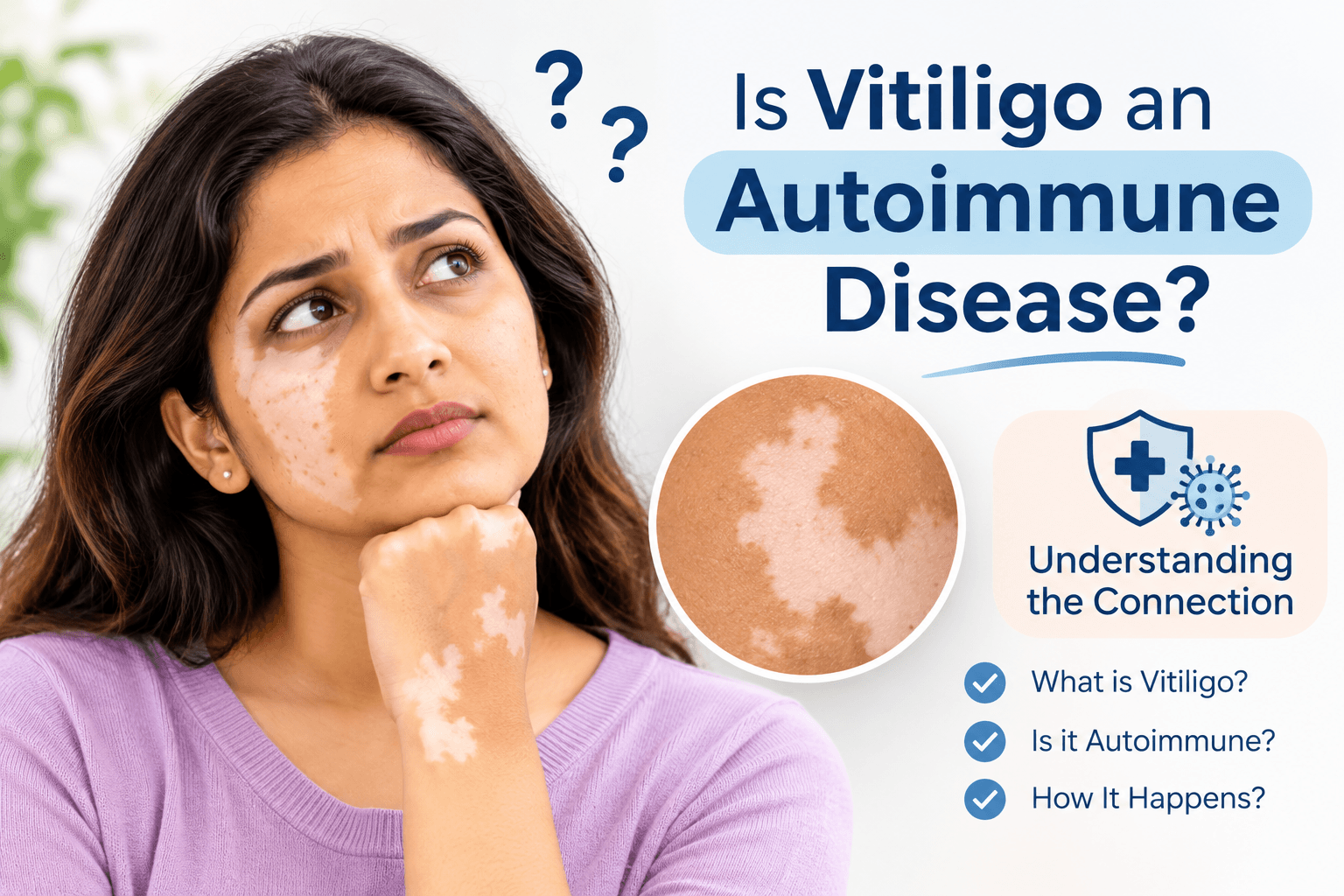
Vitiligo is generally regarded as an autoimmune condition in which the immune system targets melanocytes, the pigment-producing cells of the skin. Genetic and environmental factors also contribute. The condition is not contagious.
What Is Vitiligo?
Vitiligo is a long-lasting condition in which patches of skin lose their colour. When pigment-producing cells are destroyed, the affected skin turns milky white. Hair growing in those areas can also turn white.
It affects an estimated 0.5 to 1 percent of people worldwide. It can start at any age, though many people notice the first patches before age 20, and it occurs at similar rates across all ethnic groups. It is simply more visible on darker skin.
Is Vitiligo Really an Autoimmune Disease?
In an autoimmune disease, the immune system mistakes the body’s own tissue for a threat. In vitiligo, the target appears to be melanocytes. Research also suggests these cells may be more vulnerable to stress than usual, which makes them easier targets.
Wording matters here. The National Institute of Arthritis and Musculoskeletal and Skin Diseases says vitiligo “may be” autoimmune, because the exact cause is still unknown. Other medical sources say it is generally considered autoimmune. The honest summary: autoimmunity is the leading explanation, and the evidence for it is strong, but researchers are still working out the full picture.
The Autoimmune Connection to Other Conditions
About 15 to 25 percent of people with vitiligo also have at least one other autoimmune condition. Examples include:
- Autoimmune thyroid disease
- Type 1 diabetes
- Rheumatoid arthritis
- Psoriasis
- Pernicious anaemia
- Addison disease
- Lupus
- Celiac disease
- Crohn disease and ulcerative colitis
Most people with vitiligo are otherwise healthy. Without another autoimmune condition, vitiligo does not usually affect general health. Because of the overlap, though, a doctor may check for related conditions, such as thyroid problems.
Do Genes and Triggers Play a Part?
Yes. Vitiligo likely results from a combination of factors:
- Genetics: Variations in more than 30 genes are linked to higher risk, most involving immune function or melanocyte biology. About one in five people with vitiligo has a close relative with it, but the inheritance pattern is complex.
- Triggers: Sunburn, emotional stress, certain chemicals and skin-whitening products have been suggested as triggers in people who are already predisposed.
Having the genes does not guarantee vitiligo, and stress alone does not cause it.
What Are the Types of Vitiligo?
- Generalised (non-segmental): The most common form, with patches across the body, often on the face, neck, hands and around the mouth.
- Segmental: Smaller patches limited to one side of the body, in about 10 percent of cases.
Patches often spread over time, but in some people they stay the same or even shrink.
How Is Vitiligo Diagnosed?
A dermatologist reviews your history and examines your skin, often with a Wood’s lamp, a UV light used in a dark room. Vitiligo patches glow bright white under it. If the findings fit, vitiligo can often be diagnosed without a biopsy. Blood tests or a skin sample may be used when the picture is unclear.
Could It Be Something Else?
Not every white patch is vitiligo. A dermatologist first checks whether the skin is truly depigmented (no pigment) or only lighter. Conditions that can look similar include:
- Tinea versicolor, a harmless fungal condition that causes light, scaly spots on the chest and back
- Pityriasis alba and other post-inflammatory lightening after eczema or injury
- Idiopathic guttate hypomelanosis, small pale spots on sun-exposed skin
- Nevus depigmentosus and piebaldism, which are present from birth
- Lichen sclerosus and morphea, which need prompt treatment to prevent lasting changes
Each has a different cause and treatment, and some can cause harm if missed. A person can even have vitiligo and another condition at once. This is why a photo or an online description is no substitute for an in-person exam.
How Is Vitiligo Treated?
Treatment is individualised. It depends on the type of vitiligo, the extent of skin involvement and any associated medical conditions. The approach is matched to the stage of the disease:
- Limited, stable vitiligo: Stable means no change in the size of existing patches and no new patches in the last year. In suitable patients, surgical procedures may be an option.
- Extensive vitiligo: Usually treated with medicated creams, oral medications or ultraviolet light therapy.
- Vitiligo affecting almost the entire body: Depigmentation therapy, which removes the remaining pigment from the darker areas of skin, may be considered.
Outcomes vary with the severity of vitiligo, family history and the individual’s response to treatment. In some cases, treatment achieves significant repigmentation and, in selected patients, near-complete restoration of skin colour.
Living With Vitiligo
Vitiligo can affect self-esteem and mood. Helpful steps include:
- Using sunscreen and protective clothing, since depigmented skin burns easily
- Using cosmetic camouflage if you wish
- Finding a doctor experienced in vitiligo
- Joining support groups
- Seeking counselling if the emotional toll is heavy
Vitiligo Care at Novocare, Kochi
Novocare’s skin care team in Edappally treats vitiligo under its medical concerns services, including a dedicated vitiligo page. The same section covers psoriasis, eczema and skin allergies, which are worth ruling out when a patch of skin changes colour. The consultant dermatologists are Dr Nadiya Rahman, Dr Reem M Padiyath and Dr Jiss Elizabeth. Not sure who to see? Read how to choose a good dermatologist.
The clinic is open Monday to Saturday, 10 AM to 6 PM. You can book an appointment online.
When Should You See a Dermatologist?
Book a visit if you notice:
- New white or pale patches you can’t explain
- Patches that are spreading or changing
- White hair appearing in a patch
- Spots that itch, scale, feel numb or look different from the others
Early assessment helps rule out look-alikes and starts treatment sooner.
Frequently Asked Questions
Is vitiligo contagious? No. You cannot catch it from touch or sharing items.
Is vitiligo caused by a vitamin deficiency or diet? The sources reviewed point to immune, genetic and environmental factors, not diet.
Can vitiligo be cured? No cure exists, but treatment can help skin tone look more even.
Does vitiligo affect general health? Not by itself. It can affect self-image, and some people have other autoimmune conditions that need separate care.
Can stress cause vitiligo? Stress is a suggested trigger in people who are predisposed, but it is not the sole cause.