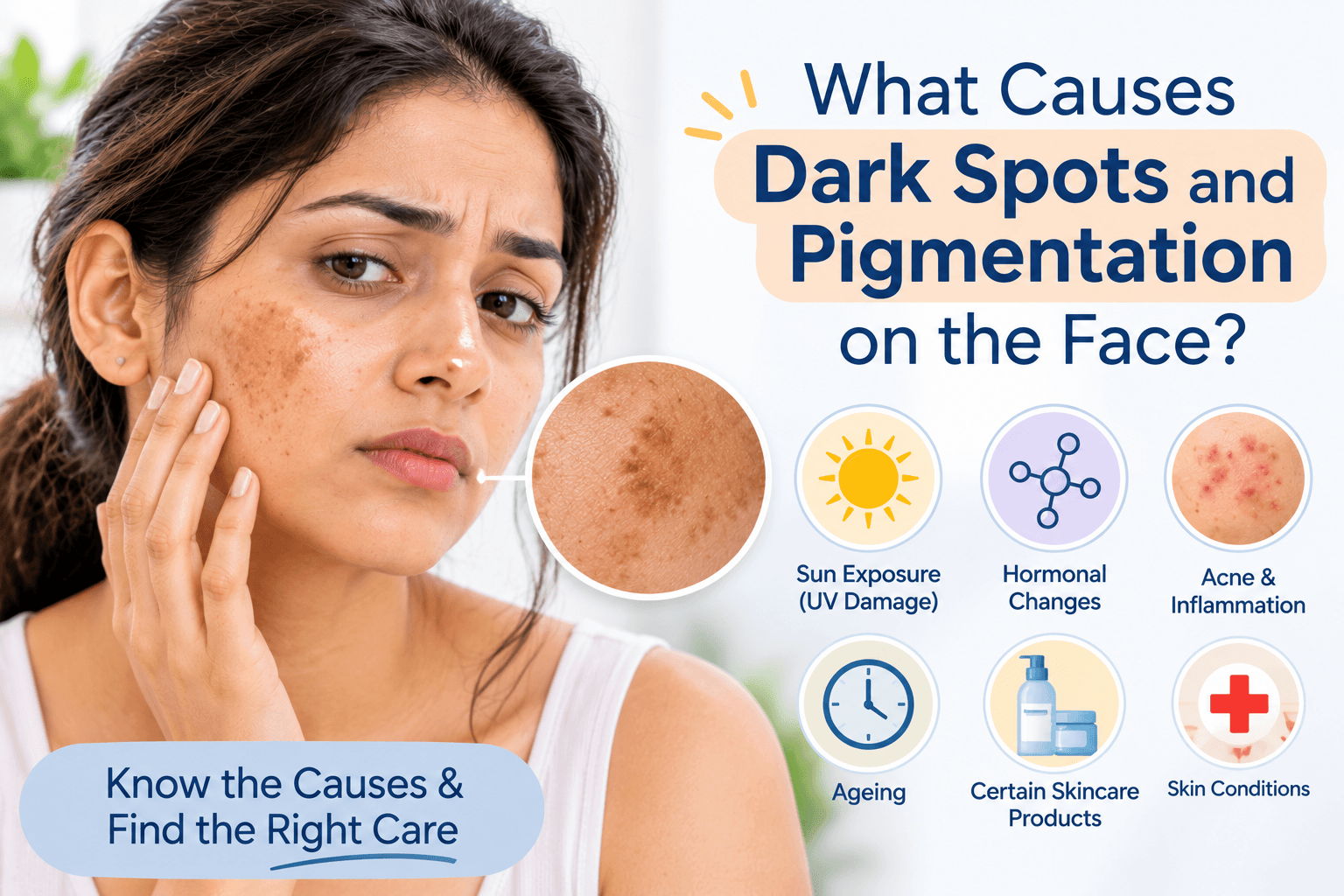
Dark spots appear when skin produces or holds too much melanin, the pigment that gives skin its colour. The most common causes are sun exposure, hormonal changes (such as melasma), inflammation from acne or skin injury, certain medications, and some medical conditions. Most dark spots are harmless, but a new or changing spot should always be checked.
What Is Facial Pigmentation?
Hyperpigmentation is a common condition in which patches of skin become darker than the surrounding skin. Skin cells that are damaged or stressed can overproduce melanin, which then clumps and darkens the area. The patches can look brown, black, grey, red or pink, and they affect people of every skin tone.
Usually there is no pain or itching. The main effect is cosmetic, and many people find it affects their confidence.
What Are the Main Causes?
1. Sun exposure
Ultraviolet light is the most common trigger. Sun spots (also called age spots or liver spots) form after repeated exposure to sunlight or tanning beds. On the face, they often appear on the forehead, upper lip and chin. UV light can also darken existing marks, which is why spots return when sun protection is skipped.
2. Hormonal changes and melasma
Melasma causes symmetrical brown or grey-brown patches, most often on the cheeks, forehead, bridge of the nose and above the upper lip. It is most common in women during their reproductive years, and hormonal shifts such as pregnancy or birth control pills can trigger it. Sun exposure makes it worse. If your patches look like this, read our overview of hyperpigmentation and melasma treatment.
3. Post-inflammatory hyperpigmentation
Any inflammation can leave a dark mark behind. Common sources include:
- Acne
- Eczema or psoriasis
- Cuts, burns and insect bites
- Irritation from cosmetic or hair products
These marks are more common and longer-lasting in darker skin tones. In people with darker skin they often fade within 6 to 12 months once the cause is removed, though deeper pigmentation can take years. Picking or squeezing pimples makes them worse. If acne is behind your marks, see our guide on acne in adults over 30.
What Else Can Cause Dark Spots?
4. Medications
Some medicines can increase pigmentation or make skin more sensitive to light. Examples include certain anti-inflammatory drugs, chemotherapy drugs, antimalarials, anticonvulsants and birth control pills. Never stop a prescribed medication on your own. Speak to your doctor if you suspect a link.
5. Medical conditions and nutrition
Darkening can sometimes point to something internal:
- Thyroid disorders
- Adrenal disorders such as Addison’s disease
- Diabetes-related skin changes, such as velvety darkened skin
- Low levels of vitamin B12 or folate
If your pigmentation appeared suddenly, or comes with tiredness or other symptoms, a doctor may check blood levels of vitamins, hormones, iron and thyroid function.
6. Genetics
A family history of freckling or pigmentation makes you more likely to develop dark spots, however careful you are with sun protection.
When Could a Dark Spot Be Serious?
Most dark spots are harmless, but a new dark spot can occasionally signal skin cancer. See a doctor promptly if a spot:
- Appears suddenly
- Itches, tingles or bleeds
- Changes in colour or size
- Has an irregular shape, blurry borders or mixed colours
- Is larger than about a quarter of an inch across
Also seek advice if the skin becomes red, hot, painful or leaks fluid.
How Is the Cause Diagnosed?
A dermatologist reviews your history and medications, examines your skin and may use a Wood’s lamp, a black light that shows how deep the pigment sits. Blood tests can check for nutritional, hormonal or thyroid causes. A biopsy is used if skin cancer is suspected. Knowing your own skin type also helps your dermatologist choose safe treatments.
How Are Dark Spots Treated?
Most dark spots need no treatment, but many people choose to fade them. Options include:
- Sun protection and lifestyle changes: daily broad-spectrum sunscreen (SPF 30 or higher), hats and shade
- Topical products: ingredients such as azelaic acid, kojic acid, glycolic acid, tretinoin, vitamin C and niacinamide, and prescription hydroquinone
- Chemical peels: gradual exfoliation that fades spots
- Cryotherapy: freezing individual spots
- Laser treatments: for pigmented lesions and resurfacing
- Microdermabrasion: removes the top skin layer
Procedures tend to work faster but cost more and carry a higher risk of side effects than creams. Results take time: weeks to months, and sometimes up to a year. New spots can still appear, especially without sun protection.
Pigmentation Treatment at Novocare, Kochi
Novocare’s hyperpigmentation and melasma treatment uses laser treatment, chemical peels and targeted topical treatments, customised to your skin type. Laser toning is part of the service. For milder concerns, the clinic also offers medifacials for uneven skin tone and reducing skin tan.
Novocare’s consultant dermatologists are Dr Nadiya Rahman, Dr Reem M Padiyath and Dr Jiss Elizabeth. If your pigmentation may be hormonal, such as with PCOS, Dr Jiss’s training in dermatology and gynaecology can help. Not sure who to see? Read how to choose a good dermatologist. The clinic is open Monday to Saturday, 10 AM to 6 PM, and you can book an appointment online.
How Can You Prevent Dark Spots?
- Apply broad-spectrum sunscreen every day, even on cloudy days
- Wear a wide-brimmed hat and sunglasses
- Limit sun exposure between 10 AM and 2 PM
- Treat acne and other inflammatory skin conditions early
- Don’t pick or squeeze pimples
- Use gentle skincare and stop any product that irritates your skin
Melasma during pregnancy cannot always be prevented, but sun protection helps limit it.
What to avoid
- Lemon juice, apple cider vinegar and abrasive scrubs: there is little evidence they work, and they can irritate skin or worsen spots
- Bleach: never apply it to skin
- Unregulated skin-lightening products: some contain mercury or other harmful ingredients that can damage the kidneys, nerves and immune system
Check with a doctor before using any skin-lightening product.
Frequently Asked Questions
Are dark spots on the face dangerous? Usually not. A new, changing, bleeding or irregular spot should be examined by a doctor.
Why do dark spots keep coming back? Sun exposure, hormones and ongoing inflammation can trigger new pigment even after treatment. Daily sunscreen is the best protection.
Is melasma the same as sun spots? No. Sun spots come from sun damage, while melasma is mainly hormone-driven and made worse by sun.
How long do dark spots take to fade? Post-acne marks may fade in 6 to 12 months, while deeper pigmentation can take longer. Treatment can take months.
Can diet or vitamins affect pigmentation? Low vitamin B12 or folate can be one cause, so a doctor may test your levels.